Silnik elektryczny to urządzenie, które przekształca energię elektryczną w energię mechaniczną poprzez działanie elektromagnetyczne.
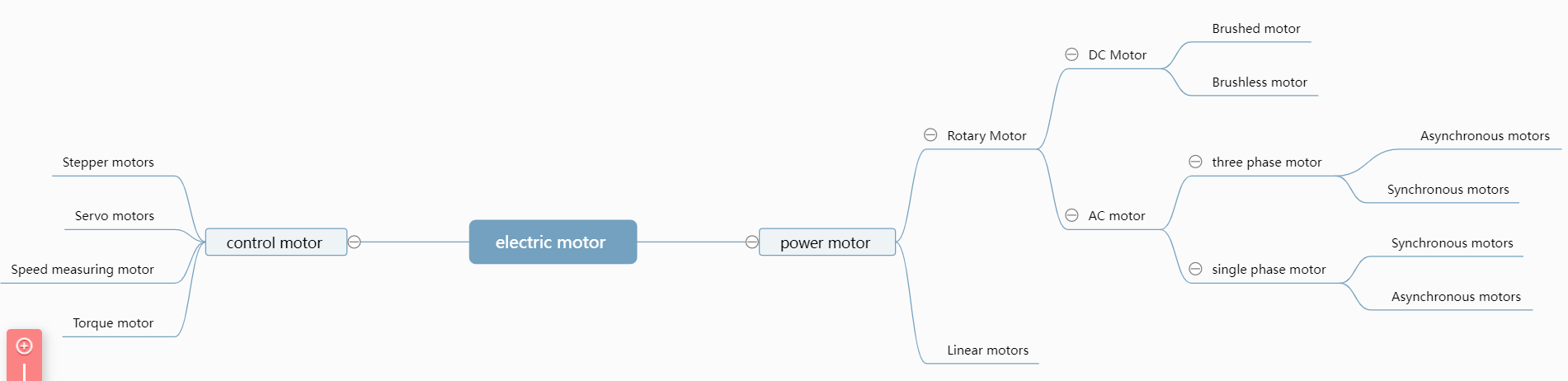
Ze względu na formę energii elektrycznej silniki można podzielić na dwie kategorie: silniki prądu przemiennego i silniki prądu stałego.
Wśród nich silniki prądu przemiennego można podzielić na jednofazowe silniki prądu przemiennego i trójfazowe silniki prądu przemiennego. Ze względu na różnicę prędkości obrotowej, zgodnie z zasadą klasyfikacji, silnik można również podzielić na silniki synchroniczne i silniki asynchroniczne.
Silniki synchroniczne można podzielić na silniki synchroniczne z magnesami trwałymi, silniki synchroniczne z histerezą i silniki synchroniczne reluktancyjne w zależności od różnych pól magnetycznych.
Z drugiej strony silniki asynchroniczne są dostępne nie tylko w postaci indukcyjnej, ale także w postaci komutatora prądu przemiennego.
Formę indukcyjną można podzielić na trójfazowe silniki asynchroniczne i silniki asynchroniczne z zacienionymi biegunami. Ponadto, w zależności od rodzaju zabezpieczenia, silnik można podzielić na silniki zamknięte, otwarte, wodoszczelne, zanurzalne, wodoszczelne i przeciwwybuchowe.
Silnik elektryczny jest ważną częścią układu przesyłowego i sterującego, który jest urządzeniem elektromagnetycznym umożliwiającym konwersję lub przesyłanie energii elektrycznej zgodnie z prawem indukcji elektromagnetycznej, a główną rolą jest generowanie momentu napędowego jako źródła zasilania urządzeń elektrycznych lub różnych maszyn oraz przekształcanie energii elektrycznej w energię mechaniczną.
Wraz z rozwojem nowoczesnej nauki i technologii, zainteresowanie silników w praktycznych zastosowaniach zaczęło przesuwać się z prostej przekładni stosowanej w przeszłości na złożone sterowanie, szczególnie w celu precyzyjnego sterowania prędkością, położeniem i momentem obrotowym silnika.
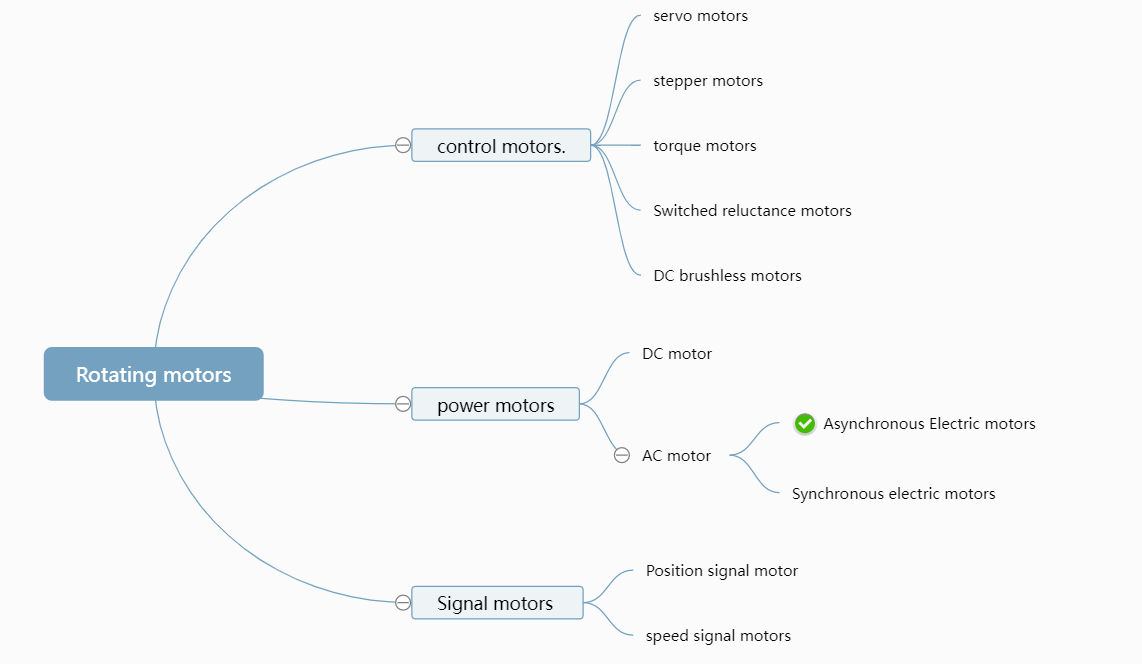
Jednakże silniki będą miały różne konstrukcje i metody napędu w zależności od różnych zastosowań. Ze względu na zastosowania silników wirujących dokonuje się następującej podstawowej klasyfikacji i przedstawiamy głównie najbardziej reprezentatywne, powszechne i podstawowe silniki w silnikach - silniki sterujące, silniki mocy i silniki sygnałowe.
Control motors are mainly used for precise speed and position control, and as "actuators" in control systems. They can be divided into servo motors, stepper motors, torque motors, switched reluctance motors, brushless DC motors and other categories.
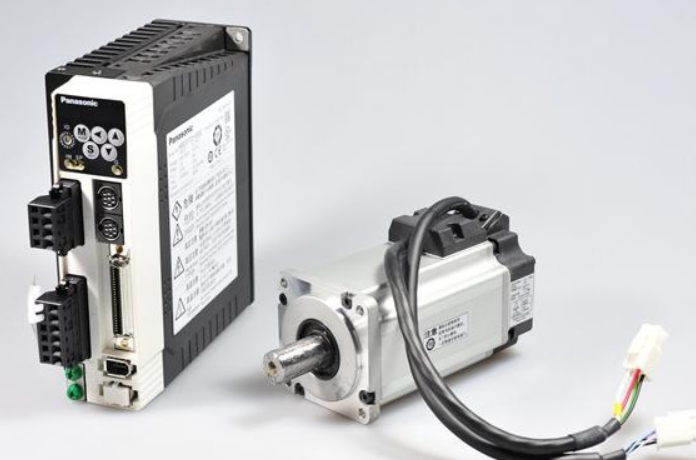
Silniki serwo
Najwcześniejszym serwomotorem jest ogólny silnik prądu stałego i tylko wtedy, gdy precyzja sterowania nie jest wysoka, jako serwosilnik używany jest ogólny silnik prądu stałego. Obecny serwosilnik prądu stałego jest silnikiem prądu stałego o małej mocy pod względem konstrukcji, a jego wzbudzenie wykorzystuje głównie sterowanie twornikiem i sterowanie polem magnetycznym, ale zwykle przyjmuje sterowanie twornikiem.
Silniki serwo znajdują szerokie zastosowanie w różnych układach sterowania, głównie w różnych układach sterowania ruchem, zwłaszcza w systemach nadążnych. Może przekształcić sygnał napięcia wejściowego na wyjście mechaniczne na wale silnika i przeciągnąć kontrolowany element, aby osiągnąć cel sterowania. Ogólnie rzecz biorąc, serwomotor wymaga, aby prędkość silnika była kontrolowana przez dodany sygnał napięciowy, prędkość może zmieniać się w sposób ciągły wraz ze zmianą dodanego sygnału napięciowego, moment obrotowy może być kontrolowany przez prąd wyjściowy ze sterownika, a silnik powinien szybko odbijać światło, mieć małe rozmiary i małą moc sterowania.
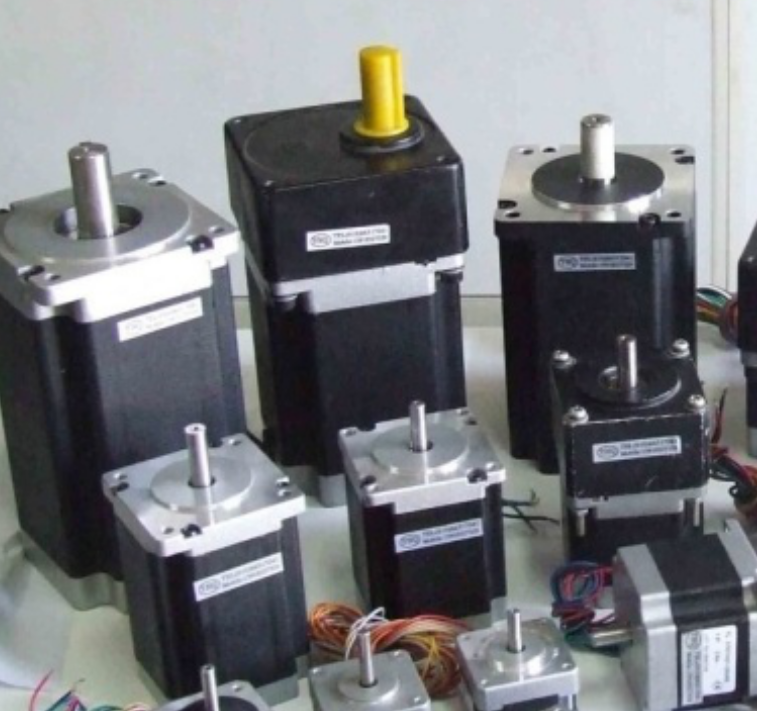
Silnik krokowy
Tak zwany silnik krokowy to siłownik, który przetwarza impulsy elektryczne na przemieszczenie kątowe. Oznacza to, że gdy sterownik krokowy odbierze sygnał impulsowy, napędza silnik krokowy, aby obrócił się o stały kąt w ustawionym kierunku.
Możemy sterować przemieszczeniem kątowym silnika kontrolując liczbę impulsów, tak aby osiągnąć cel, jakim jest precyzyjne pozycjonowanie.
Jednocześnie możemy również kontrolować prędkość i przyspieszenie obrotu silnika, kontrolując częstotliwość impulsów, aby osiągnąć cel regulacji prędkości. Obecnie do częściej stosowanych silników krokowych zaliczają się reaktywne silniki krokowe (VR), silniki krokowe z magnesami trwałymi (PM), hybrydowe silniki krokowe (HB) i jednofazowe silniki krokowe.
The difference between stepper motors and ordinary motors lies mainly in their pulse-driven form, so stepper motors can be combined with modern digital control technology and have the characteristics of simple structure, high reliability, and low cost.
But stepper motors in the control accuracy, speed change range, low-speed performance are inferior to the traditional closed-loop control of DC servo motors, so stepper motors are widely used in production practices and other precision requirements are not particularly high in various fields, especially in the field of CNC machine tool manufacturing.
And stepper motors do not need A/D conversion, can directly convert the digital pulse signal into angular displacement, so it has been considered the most ideal CNC machine tool actuators.
In addition to their application in CNC machine tools, stepper motors can also be used in other machines, such as motors in automatic feeders, motors in general-purpose floppy disk drives, and also in printers and plotters.
In addition, the stepper motor also has many defects. Because of the stepper motor's no-load start frequency, so the stepper motor can run normally at a low speed, but if higher than a certain speed can not start, and accompanied by a sharp whistling sound. Different manufacturers of subdivision drive accuracy may vary greatly, the greater the subdivision accuracy is more difficult to control. And, stepper motor low-speed rotation has a large vibration and noise.
Torque motor
The so-called torque motor is a flat type multi-pole permanent magnet DC motor.
Its armature has a larger number of slots, commutation plates and series conductors to reduce torque pulsation and speed pulsation. There are two types of torque motors, DC torque motors and AC torque motors.
Among them, the DC torque motor has a small self-induced reactance, so the response is good. Its output torque is proportional to the input current, independent of the speed and position of the rotor. It can run at low speed directly connected to the load without gear reduction in a near blocked state, so it can produce high torque to inertia ratio on the shaft of the load and eliminate the systematic error due to the use of reduction gears.
AC torque motors can be subdivided into synchronous and asynchronous, and the current commonly used is the squirrel-cage asynchronous torque motor, which has the characteristics of low speed and large torque. Generally, AC torque motors are often used in the textile industry. Their working principle and structure are the same as those of single-phase asynchronous motors, but their mechanical characteristics are softer due to the higher resistance of the squirrel-cage rotor.
Switching reluctance motor
Switched reluctance motor is a new type of speed control motor, extremely simple and robust structure, low cost, excellent speed control performance, is a strong competitor of traditional control motor, has strong market potential.
However, there are also problems such as torque pulsation, operating noise, and vibration, which need some time to optimize and improve to adapt to the actual market application.
Brushless DC motor
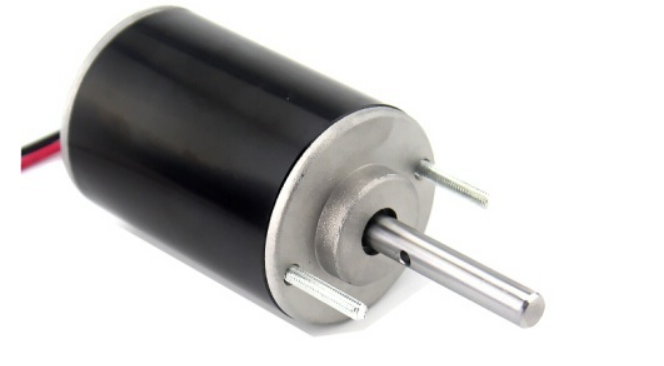
Brushless DC motor (BLDCM) is developed on the basis of brushed DC motor, but its drive current is uncompromisingly AC. Brushless DC motors can be further divided into brushless rate motors and brushless torque motors. Generally, brushless motors have two types of drive currents, one is a trapezoidal wave (usually a "square wave") and the other is a sine wave. Sometimes the former is called a brushless DC motor and the latter is called an AC servo motor, which is also a kind of AC servo motor to be exact.
Brushless DC motors usually have a "slender" structure in order to reduce rotational inertia. Brushless DC motors are much smaller in weight and volume than brushed DC motors, and the corresponding rotational inertia can be reduced by about 40%-50%. Due to the processing problems of permanent magnet materials, the capacity of brushless DC motors is generally below 100kW.
The mechanical characteristics and regulation characteristics of this motor have good linearity, wide speed range, long life, easy maintenance and low noise, and there is no series of problems caused by brushes, so this motor has great potential for application in control systems.
Brushless DC motors are usually of "slender" construction to reduce the inertia.
Brushless DC motors are much smaller in weight and volume than brushed DC motors, and the corresponding rotational inertia can be reduced by about 40%-50%. Due to the processing problems of permanent magnet materials, the capacity of brushless DC motors is generally below 100kW.
The mechanical characteristics and regulation characteristics of this motor have good linearity, wide speed range, long life, easy maintenance and low noise, and there is no series of problems caused by brushes, so this motor has great potential for application in control systems.
silnik mocy
Power motor is divided into DC motor and AC motor, and AC motor is mainly divided into synchronous motor and asynchronous motor.
DC motor
DC motor is the earliest motor, about the end of the 19th century, which can be roughly divided into two categories with commutator and without commutator.
DC motor has better control characteristics, although in structure, price and maintenance are not as good as AC motor.
But because the speed control problem of AC motor has not been well solved, and DC motor has the advantages of good speed control performance, easy to start, able to load starting,
so the application of DC motor is still very wide, especially after the emergence of silicon controlled DC power supply.
Application status: In life, there are countless applications of electric products, such as fans, razors, automatic doors in hotels, automatic door locks, automatic curtains, etc., all use DC motors.
DC motors are also widely used in locomotive traction, such as DC traction motors for railroad locomotives, DC traction motors for subway locomotives, DC auxiliary motors for locomotives, DC traction motors for mining locomotives, DC motors for ships, etc.
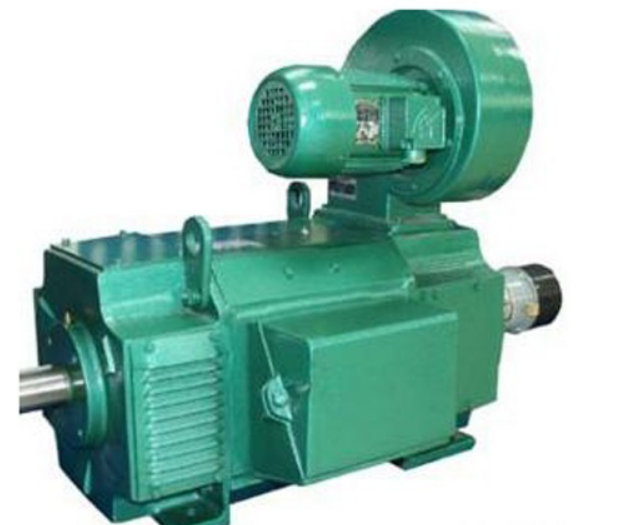
They are also widely used in aircraft, tanks, radar and other weapons and equipment. The picture shows the Z4 series DC motor.
AC motor
Synchronous motor
The so-called synchronous motor is an electric motor driven by alternating current, the rotor and stator rotating magnetic field run synchronously.
The stator of synchronous motor is exactly the same as that of asynchronous motor, but there are two types of rotor: "convex pole" and "hidden pole".
The convex rotor synchronous motor is simple and easy to manufacture, but the mechanical strength is low and it is suitable for low speed operation.
The hidden pole synchronous motor has complicated manufacturing process, but has high mechanical strength and is suitable for high speed operation.
The working characteristic of synchronous motor is the same as all motors, which is "reversible", that is, it can run in generator mode and motor mode.
Application status: Synchronous motors are mainly used in large machines, such as blowers, pumps, ball mills, compressors, steel rolling mills, small and miniature instruments and equipment, or as control elements, of which three-phase synchronous motors are the main body.
In addition, it can also be used as a regulator to deliver inductive or capacitive reactive power to the grid.
Asynchronous motor
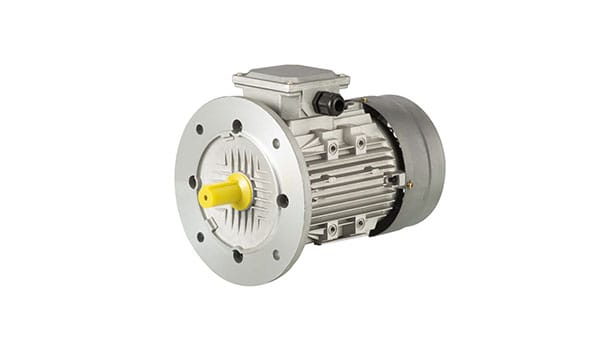
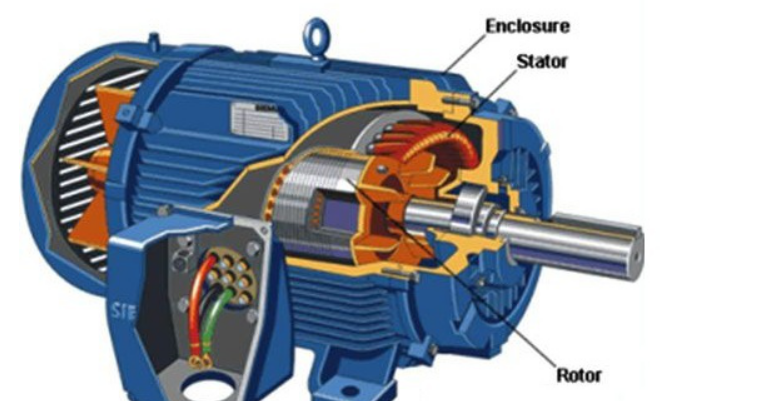
Asynchronous motor is a kind of AC motor based on the interaction of air gap rotating magnetic field and rotor winding induction current to produce electromagnetic torque and realize energy conversion.
Asynchronous motor is generally a series of products with a wide range of specifications, and it is the most widely used and the most demanded among all motors.
At present, about 90% of the machinery in the power transmission use AC asynchronous motor, so its electricity consumption accounts for more than half of the total electric load.
Asynchronous motor has the advantages of simple structure, easy manufacturing, use and maintenance, reliable operation as well as smaller mass and lower cost.
Moreover, asynchronous motor has high operating efficiency and good working characteristics, from no-load to full-load range close to constant speed operation, can meet the transmission requirements of most industrial and agricultural production machinery.
Asynchronous motors are widely used in driving machine tools, pumps, blowers, compressors, lifting and winding equipment, mining machinery, light industry machinery, agricultural and sideline processing machinery and most industrial and agricultural production machinery, as well as household appliances and medical equipment.
Application status: The more common asynchronous motors are single-phase asynchronous motors and three-phase asynchronous motors, of which the three-phase asynchronous motor is the main body of the asynchronous motor, three-phase asynchronous motor can be used to drive a variety of general-purpose machinery such as compressors, pumps, crushers, cutting machine tools, transport machinery and other mechanical equipment, in mining, machinery, metallurgy, petroleum, chemical industry, power stations and other industrial and mining enterprises as the prime mover The motor is used in mining, machinery, metallurgy, petroleum, chemical industry, power station and other industrial and mining enterprises.
Single phase asynchronous motors are generally used in places where a three phase power supply is not convenient, mostly miniature and small-capacity motors, which are more used in household appliances, such as electric fans, refrigerators, air conditioners, vacuum cleaners, etc.
At present, the most representative position signal motors: resolver, induction synchronizer and self-adjusting angle machine.
(1) Rotary transformer
Rotary transformer is an electromagnetic sensor, also known as synchronous decomposer. It is a small AC motor for measuring angle, used to measure the angular displacement and angular velocity of the rotating object, and consists of a stator and a rotor. The stator winding is used as the primary side of the transformer to receive the excitation voltage, and the excitation frequency is usually 400, 3000 and 5000 HZ, etc. The rotor winding is used as the secondary side of the transformer to receive the excitation voltage. The rotor winding is used as the secondary side of the transformer to get the induced voltage through electromagnetic coupling.
Application Status: The resolver is a precision angle, position and speed detection device, which is suitable for all rotary transformer resolver occasions using rotary encoder, especially for high temperature, cold, humidity, high speed, high vibration and other occasions where rotary encoder cannot work properly. Due to the above characteristics of the rotary transformer, it can completely replace the photoelectric encoder and is widely used in the angle and position detection system in the fields of servo control system, robot system, mechanical tools, automobile, electric power, metallurgy, textile, printing, aerospace, ship, weapon, electronics, metallurgy, mining, oil field, water conservancy, chemical industry, light industry, construction, etc. It can also be used in coordinate transformation, trigonometric operation and angle data transmission, and as two-phase phase shifter in angle-digital conversion device.
Induction synchronizer
Induction synchronizer is composed by using the principle that the mutual inductance of two planar windings varies with position, and can be used to measure linear or angular displacement. Among them, the measurement of linear displacement is called linear induction synchronizer (or long induction synchronizer), and the measurement of angular displacement is called side induction synchronizer (or rotary induction synchronizer). Synchronizers have the advantages of high precision and resolution of measuring aggregation, strong anti-interference ability, low influence by environment, long service life, simple maintenance, can be spliced into various measuring lengths and can maintain unit accuracy, good processability, low cost, easy to copy and batch production. Therefore, synchronizers are widely used in large machine tools and medium-sized machines as digital displacement to provide display or control devices.
Application status: Induction synchronizers are widely used to measure linear displacement, angular displacement and physical quantities related to them, such as rotational speed, vibration, etc. Linear induction synchronizer is often used in large precision machine tools, coordinate milling machines and other CNC machine tools positioning control and digital display; circular induction synchronizer is often used in the need to reach the antenna fixed tracking, guide scrupulous guidance, precision machine tools or measuring instruments and equipment indexing device, etc.
self-adjusting angle machine
Self-aligning angle machine is the use of self-aligning characteristics of the angle into AC voltage or from AC voltage into the angle of the induction micro-motor, in the servo system is used as a displacement sensor to measure the angle. Self-aligning machines can also be used to transmit, transform, receive and indicate angle signals over long distances. Two or more motors are linked by circuitry so that two or more rotation axes that are not connected to each other mechanically automatically maintain the same change in angle, or rotate synchronously, and this property of the motor is called the self-integrating step characteristic. In the servo system, the self-tuning machine used on the generating side is called the transmitter, and the self-tuning machine used on the receiving side is called the receiver.
Application status: Self-aligning angle machine is widely used in metallurgy, navigation and other position and orientation synchronization indication system and artillery, radar and other servo systems.
This is my summary of some information about the motor class, if any shortcomings or improper place, welcome to leave a comment. Thank you!
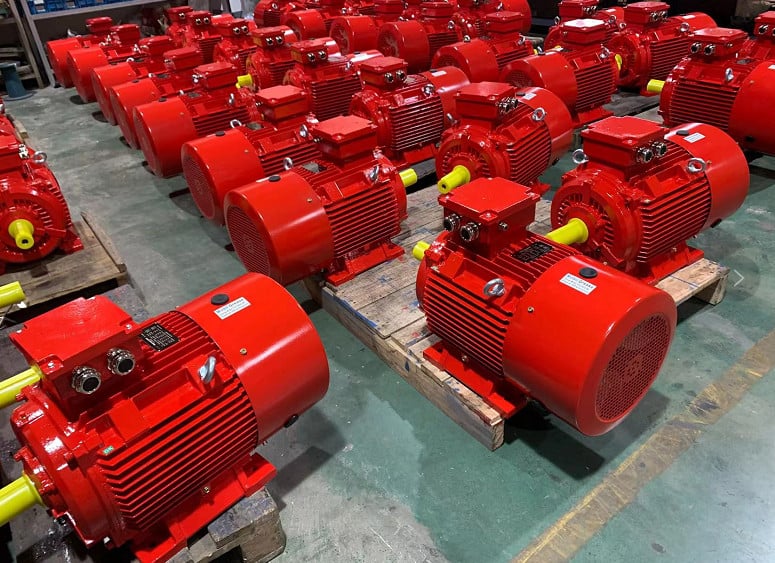
We are professional manufacturer of electric motors in China.
Hey, I read your article and your information is very amazing and so much helpful for me. Keep it up and Thank you very much. 🙂 More info athttps://tsca.com.ph/




2 Responses
Hey, I read your article and your information is very amazing and so much helpful for me. Keep it up and Thank you very much. 🙂 More info at https://tsca.com.ph/
thanks for your kind comments!